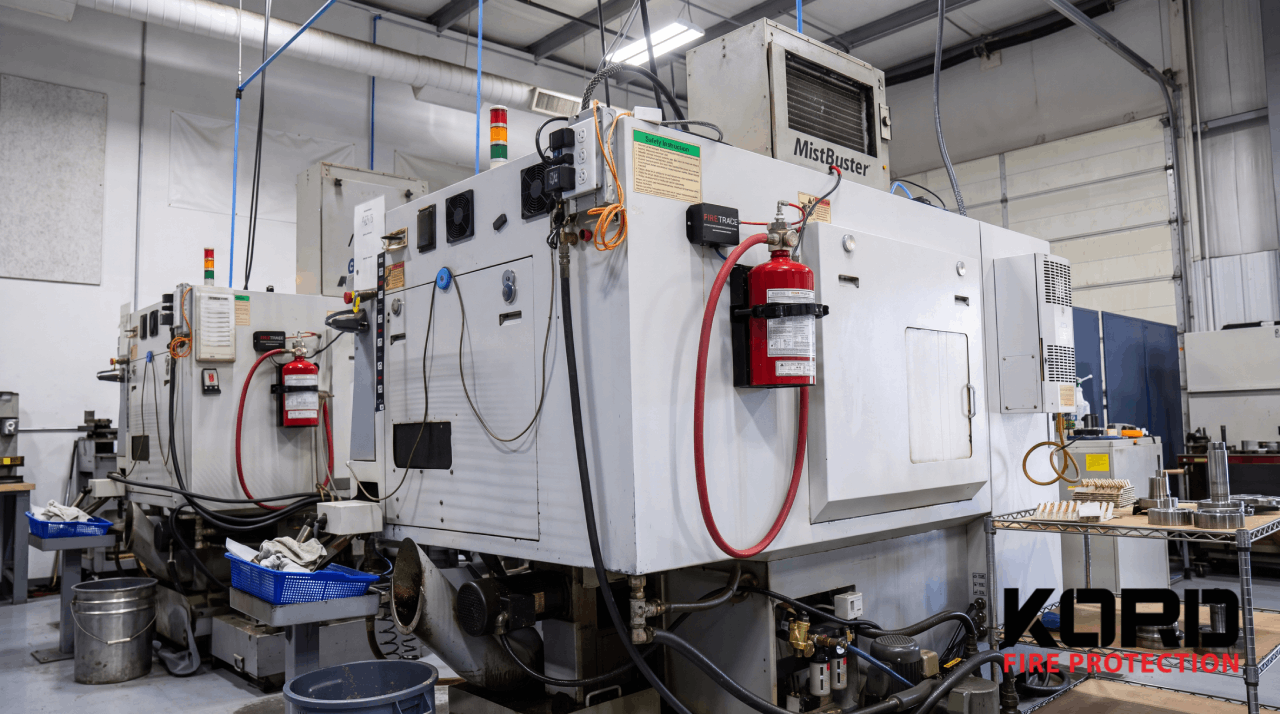
Localized fire protection helps facilities protect equipment, reduce downtime, and respond faster to enclosed machinery fire risks.
LOS ANGELES, CA, UNITED STATES, July 6, 2026 /EINPresswire.com/ — As facilities continue to rely on electrical cabinets, CNC equipment, control panels, and specialized industrial machinery, more attention is being placed on localized fire protection systems designed to detect and suppress fires at the source of the hazard.
Machinery Fire Systems help protect electrical cabinets, CNC equipment, and industrial assets by addressing fire risks that may begin inside enclosed equipment long before flames are visible in the larger room. These systems are designed for applications where a small electrical or mechanical fire can create major downtime, equipment damage, production delays, or safety concerns.
Machinery Fire Systems are often discussed under several industry names, including cabinet suppression systems, automatic electrical cabinet fire suppression systems, CNC fire suppression systems, panel suppression systems, and indirect release fire suppression systems. While terminology may vary, the purpose is similar: protect high-value equipment with a targeted system that responds directly to conditions inside or near the protected hazard.
Electrical cabinets and industrial machinery can contain wiring, controls, relays, motors, drives, switches, oils, coolants, dust, and other components that may increase fire risk. In some cases, the first sign of a developing issue may be heat inside an enclosure, damaged wiring, failing electrical components, or localized flame near sensitive equipment. A room-level fire protection system may still be required, but it may not address the earliest stage of a fire inside a machine or cabinet.
Many indirect release system designs use heat-sensitive detection tubing routed through the protected area. When the tubing is exposed to enough heat or flame, the system activates and releases suppression agent through nozzles positioned to protect the hazard. This allows the fire event to be addressed close to the equipment where it begins, rather than waiting for fire growth to affect the surrounding room.
For facilities with CNC equipment, localized fire protection may be especially important. CNC machines can involve cutting fluids, oils, chips, high-speed operation, electrical controls, and enclosed work areas. A fire inside one machine can interrupt production, damage expensive equipment, affect nearby assets, and create cleanup or safety issues. Machinery Fire Systems give facility teams another layer of protection for equipment that supports daily operations.
Electrical coordination is also part of the discussion. Industrial equipment and control cabinets often depend on proper wiring, service access, disconnects, grounding, controls, shutdown sequences, and safe maintenance practices. In facilities where fire protection and industrial electrical systems overlap, coordination between fire protection professionals, electrical teams, and facility operators can help reduce gaps in system planning.
Codes and standards may also influence how these systems are evaluated. NFPA 79 provides safeguards for industrial machinery related to fire and electrical hazards, while NFPA 2001 may apply when clean agent fire extinguishing systems are used. Depending on the protected equipment, agent type, building use, and local enforcement expectations, additional fire code, building code, electrical code, insurance, or Authority Having Jurisdiction requirements may also need to be reviewed.
Kord Fire Protection is expanding its focus on this specialized category of equipment-level protection through inspection, testing, installation support, and system evaluation for machinery and cabinet applications. The emphasis is on helping facilities understand where localized fire protection may be appropriate, how existing equipment should be reviewed, and how these systems fit into a broader fire protection program.
This capability is relevant for manufacturing plants, machine shops, fabrication facilities, industrial warehouses, utility spaces, electrical rooms, production environments, and businesses that rely on high-value machinery or enclosed electrical controls. It is also part of a larger facility safety conversation that includes maintenance, electrical reliability, fire alarm integration, suppression system readiness, and documentation.
The same planning principles apply outside the United States. Facilities reviewing fire protection resources in Australia may also need to consider localized equipment protection where electrical cabinets, machinery, or industrial assets present concentrated fire risks. As equipment becomes more advanced and downtime becomes more expensive, targeted fire protection planning is becoming an important part of operational risk management.
Machinery Fire Systems should not be viewed as a replacement for required building fire protection systems such as sprinklers, alarms, extinguishers, emergency lighting, or fire pumps. Instead, they serve as a specialized layer of protection for hazards that may begin inside equipment before a larger room-level system is activated.
Facilities evaluating this type of system should review the protected hazard, equipment layout, electrical conditions, operating environment, maintenance history, agent selection, inspection requirements, and code expectations before making changes. A well-planned localized fire protection strategy can help protect equipment, reduce downtime risk, and support safer industrial operations.
Darius Kordabadi
Kord Fire Protection
+1 800-918-8978
info@kordfire.com
Visit us on social media:
LinkedIn
Instagram
YouTube
TikTok
X
Other
Legal Disclaimer:
EIN Presswire provides this news content “as is” without warranty of any kind. We do not accept any responsibility or liability
for the accuracy, content, images, videos, licenses, completeness, legality, or reliability of the information contained in this
article. If you have any complaints or copyright issues related to this article, kindly contact the author above.

Media gallery