
Few things frustrate a clinic manager more than a growing list of unpaid patient balances. The care has been provided, the insurance claim has been processed, and yet the remaining amount sits on the books for weeks or months.
For Canadian clinics, this problem is common, since patients often pay part of their care directly. The good news is that a few simple changes to how and when you collect, along with the right dental payment processing options, can make a real difference.
Collecting Outstanding Patient Balances
Canadians cover a meaningful share of their health costs themselves. According to the Canadian Institute for Health Information, private-sector spending, mainly out-of-pocket payments and private insurance, accounted for 29% of Canada’s total health spending in 2024. For dental offices, physiotherapy clinics, and other practices that bill patients directly, that means more revenue depends on smooth front-desk collection and follow-up after each visit.
1. Collect What You Know at Check-In
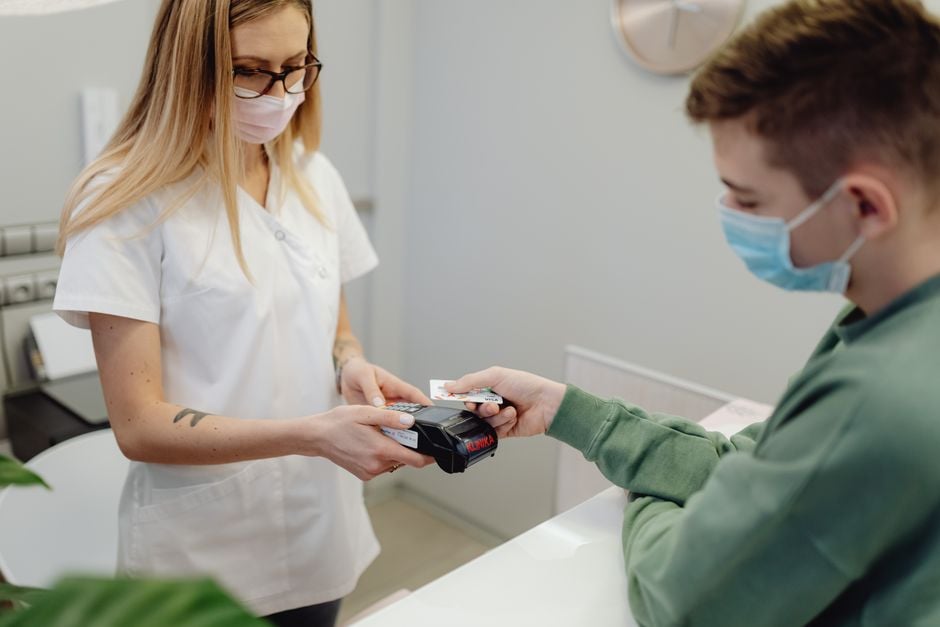
If you already know the patient’s portion, collect it at the start of the visit. Payments taken in person are faster and simpler than chasing them later. Keep the process quick, with terminals that accept chip, tap, debit, and mobile wallets.
2. Explain Costs Before Treatment
Surprise bills are harder to collect. For larger treatments, give patients a written estimate and, where possible, submit an insurance predetermination first. When patients know what to expect, they’re more likely to pay on time.
3. Send Bills Promptly After Insurance Pays
The longer a balance sits, the harder it becomes to collect. Once a claim has been processed, send the patient a clear bill right away. Emailed invoices with a secure payment link let patients pay in a few clicks instead of calling or mailing a cheque.
4. Make Paying Easy
Offer more than one way to pay. Online links suit patients who prefer to pay from home, while phone payments help those who’d rather talk to someone. The fewer steps involved, the faster balances get cleared.
5. Offer Patient Payment Plans for Larger Treatments
Orthodontics, implants, and other major treatments can be hard to pay for all at once. Patient payment plans with automatic weekly or monthly charges spread the cost and keep payments on schedule. Always get the patient’s written consent before storing a card for future charges, and set up alerts so staff can follow up quickly if a payment fails.
6. Follow Up Consistently and Kindly
Set a regular reminder schedule for unpaid balances rather than following up only when cash is tight. Friendly, consistent reminders by email or text often work better than occasional, urgent calls. Keep treatment details out of payment messages to protect patient privacy.
7. Keep Card Information Secure
Never write card numbers on paper or in patient charts. Use hosted payment pages and standalone terminals to keep card details out of your clinic’s systems, and choose a processor that offers PCI compliance support.
8. Review What Collection Is Costing You
Collecting balances also comes with processing fees, and those fees can vary more than many clinics realize. Payment specialists at Clearo Payments note that how a patient pays, such as tapping a card at the front desk versus paying through an online link, can affect a clinic’s fees.
Reviewing a recent processing statement and understanding pricing models like interchange-plus pricing can help clinics keep more of what they collect.
The Takeaway
Collecting outstanding balances doesn’t have to mean awkward conversations or endless follow-ups. Collect known amounts at check-in, explain costs upfront, bill promptly, make paying easy, offer payment plans for larger treatments, and follow up consistently. Clinics that pair these habits with the right medical credit card processing setup are better placed to keep balances low and cash flow steady.
Clearo Payments
+1 647 691 9195
4440 PGA Blvd.
Suite 600 #PMB 5005
Palm Beach Gardens
Florida
33410
United States