
Key Takeaways:
- Mud tubes, hollow or damaged wood, and swarmers (or their discarded wings) are the three clearest signs of a termite infestation.
- Virginia is classified by the National Pest Management Association (NPMA) as one of the top states in the nation for moderate to heavy termite pressure – making early detection especially critical.
- Termite damage and water damage can look nearly identical; knowing the difference could save a costly misdiagnosis.
- Most homeowners’ insurance policies do not cover termite damage, meaning the repair bill lands entirely on the homeowner.
Termites cause over $5 billion in property damage across the United States every single year. That number is staggering on its own – but for Northern Virginia homeowners, it hits closer to home. The region’s humid climate and dense, wooded surroundings create near-perfect conditions for termites to thrive, often silently, for months or even years before anyone notices. The good news? These insects do leave clues. Knowing what those clues look like can be the difference between a manageable treatment and a five-figure repair bill.
US Termites Cost $5B Yearly – Northern Virginia Is High Risk
The National Pest Management Association (NPMA) recognizes Virginia as one of the top states for moderate to heavy termite infestation – and Northern Virginia ranks among the most vulnerable pockets within the state. Warm, humid summers combined with older housing stock and wooded lots create an environment where termite colonies can grow largely undisturbed.
What makes the financial stakes so high is timing. Termite activity often progresses for months or years before visible signs appear. By the time damage becomes obvious, structural repairs may already be unavoidable. Since most homeowners’ insurance policies exclude termite damage entirely, the cost falls squarely on the homeowner. That reality makes knowing the warning signs not just helpful – it makes it essential.
Mud Tubes: The Clearest Red Flag
Of all the signs termites leave behind, mud tubes are the most unmistakable. These pencil-sized tunnels – built from a mix of mud, saliva, and wood particles – serve as protected highways between a termite colony’s underground nest and its food source. They shield the insects from predators and from drying out in open air. Spotting one on or near a home is about as direct a warning as termites ever give.
Where to Look on Your Home
Mud tubes don’t appear randomly. In Northern Virginia homes, they’re most commonly found on:
- Foundation walls – especially the exterior base of the home
- Crawl space piers and floor joists – often overlooked during casual home walkthroughs
- Basement corners – where soil contact and moisture create ideal termite conditions
- Exterior walls near ground level
Making a habit of scanning these areas – particularly after wet seasons – can catch an infestation before it advances.
Active vs. Inactive Tubes
Not every mud tube signals an active infestation. Breaking a small section open tells the story quickly: active tubes will contain live termites moving through them, while inactive tubes will appear dry and empty. Even empty tubes shouldn’t be ignored – they confirm termites have been present and may have simply relocated deeper into the structure.
Hollow or Damaged Wood Structures
Termites eat wood from the inside out. The outer surface can look perfectly normal while the interior has been hollowed into a honeycomb of tunnels and mud-packed galleries – which is what makes this sign so deceptive and so dangerous.
A simple test: tap on wooden surfaces – baseboards, door frames, window sills, floor joists – and listen. A hollow or papery sound where solid wood should be is a serious red flag. Blistering, buckling, or sagging wood surfaces are additional indicators, as are unexplained cracks in walls or warping along skirting boards.
Termite Damage vs. Water Damage
Termite damage and water damage share enough visual similarities that homeowners frequently confuse the two – sometimes treating moisture issues while an active infestation continues unchecked. But if the wood sounds hollow yet doesn’t smell musty and shows no discoloration consistent with water exposure, termite activity should move to the top of the suspect list.
Swarmers and Discarded Wings
Termite swarmers are reproductive termites that leave an established colony to start new ones. Finding them – or their discarded wings – near windows, doors, or light sources is one of the strongest indicators that a colony is already active nearby. Swarmers shed their wings almost immediately after landing, so small piles of identical, translucent wings near entry points often appear even when the insects themselves are no longer visible.
Termites vs. Flying Ants
Swarmers are commonly mistaken for flying ants, but a close look reveals clear differences:
- Termites: Straight antennae, thick waist, two pairs of wings that are equal in length
- Flying ants: Bent (elbowed) antennae, pinched waist, wings of unequal length
If what’s appearing near windows matches the termite profile, the situation warrants immediate attention – swarmers found inside a home typically mean a colony has already taken hold.
Eastern Subterranean Termites: Northern Virginia’s Primary Threat
Reticulitermes flavipes, the Eastern Subterranean termite, is the most widespread and destructive termite species in the United States – present in every state except Alaska – and the dominant species threatening Northern Virginia homes.
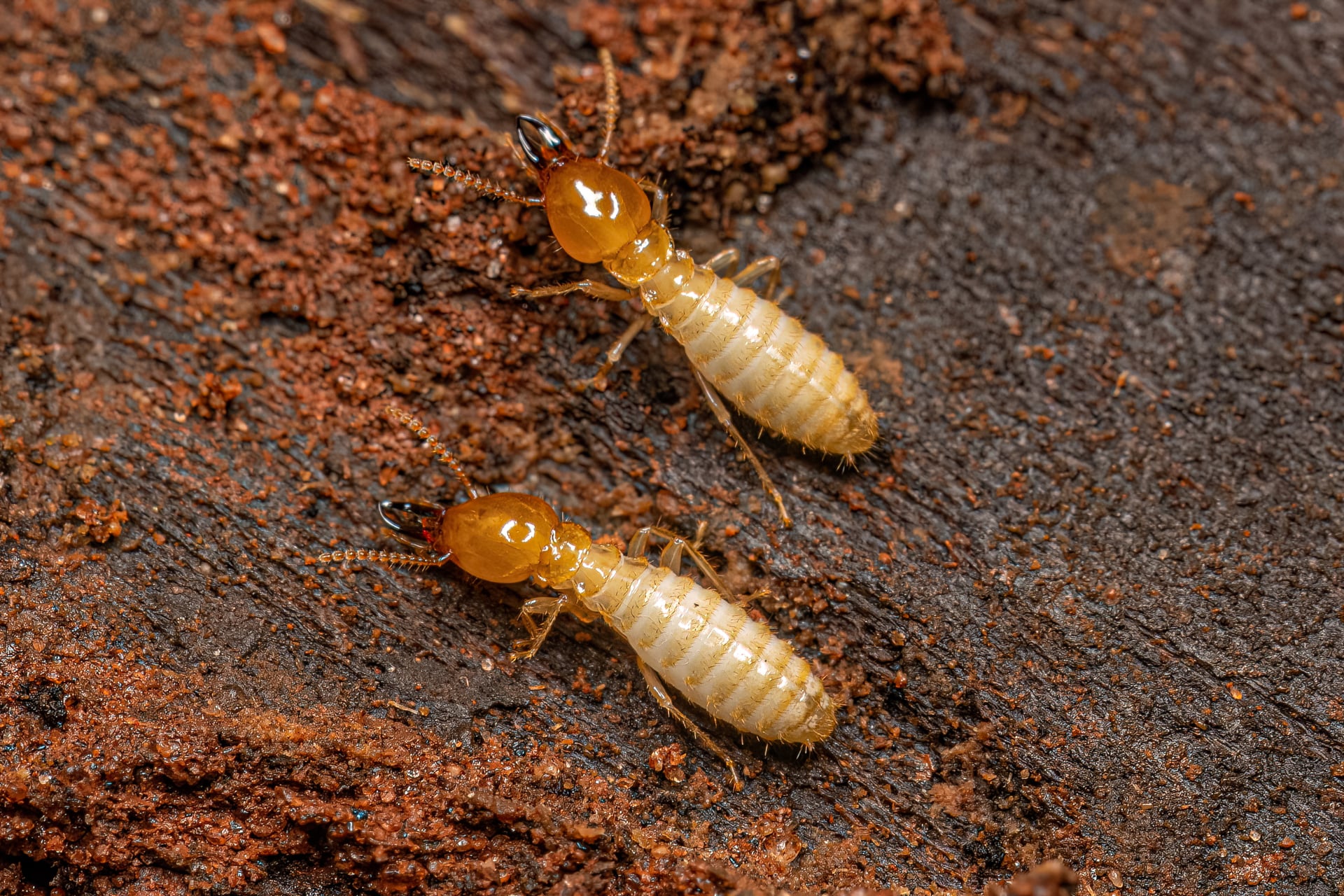
These termites depend on constant moisture and maintain a direct connection to the soil through their shelter tubes. Colonies are large, often numbering in the hundreds of thousands, and they work silently and aggressively – consuming structural wood from the inside before any surface damage becomes apparent. Workers appear cream-colored, soldiers have distinctively large heads, and swarmers are dark-winged. Their preferred habitat is underground, with direct access to both soil moisture and wood – a combination Northern Virginia’s landscape provides in abundance.
Knowing that this is the species most likely behind any infestation in the region matters because Eastern Subterranean termites respond best to targeted, soil-based treatment approaches rather than surface-level sprays.
Early Detection Saves Thousands – Here’s What to Do Now
The financial case for catching termites early is straightforward: treatment costs are a fraction of structural repair costs, and the gap between those two numbers grows every month an infestation goes undetected. Here are the most effective steps a Northern Virginia homeowner can take right now:
- Schedule an annual professional inspection – or quarterly in high-risk areas. Termites are expert hiders; trained eyes catch what homeowners miss.
- Eliminate moisture sources – fix leaks, improve drainage, and run dehumidifiers in crawl spaces and basements. Eastern Subterranean termites require moisture to survive.
- Maintain wood-to-soil separation – keep at least an 18-inch gap between soil and any wooden structural elements; use pressure-treated lumber where ground contact is unavoidable.
- Store firewood away from the home – at least 20 feet out, elevated off the ground.
- Seal entry points – caulk gaps in the foundation, around utility penetrations, and along window and door frames to reduce access points.
These steps won’t eliminate an existing colony, but they meaningfully reduce infestation risk and slow termite advancement while professional treatment is arranged. If any of the three signs above – mud tubes, hollow wood, or swarmers – have already appeared, immediate professional inspection is the appropriate next move. Waiting only expands the damage.
Connor’s Pest Pros
5410 Port Royal Rd
Springfield
VA
22151
United States


