
Originally Posted On: https://www.ucanpack.com/blog/post/how-to-compare-shipping-mailers-thickness-and-durability-in-3-simple-steps
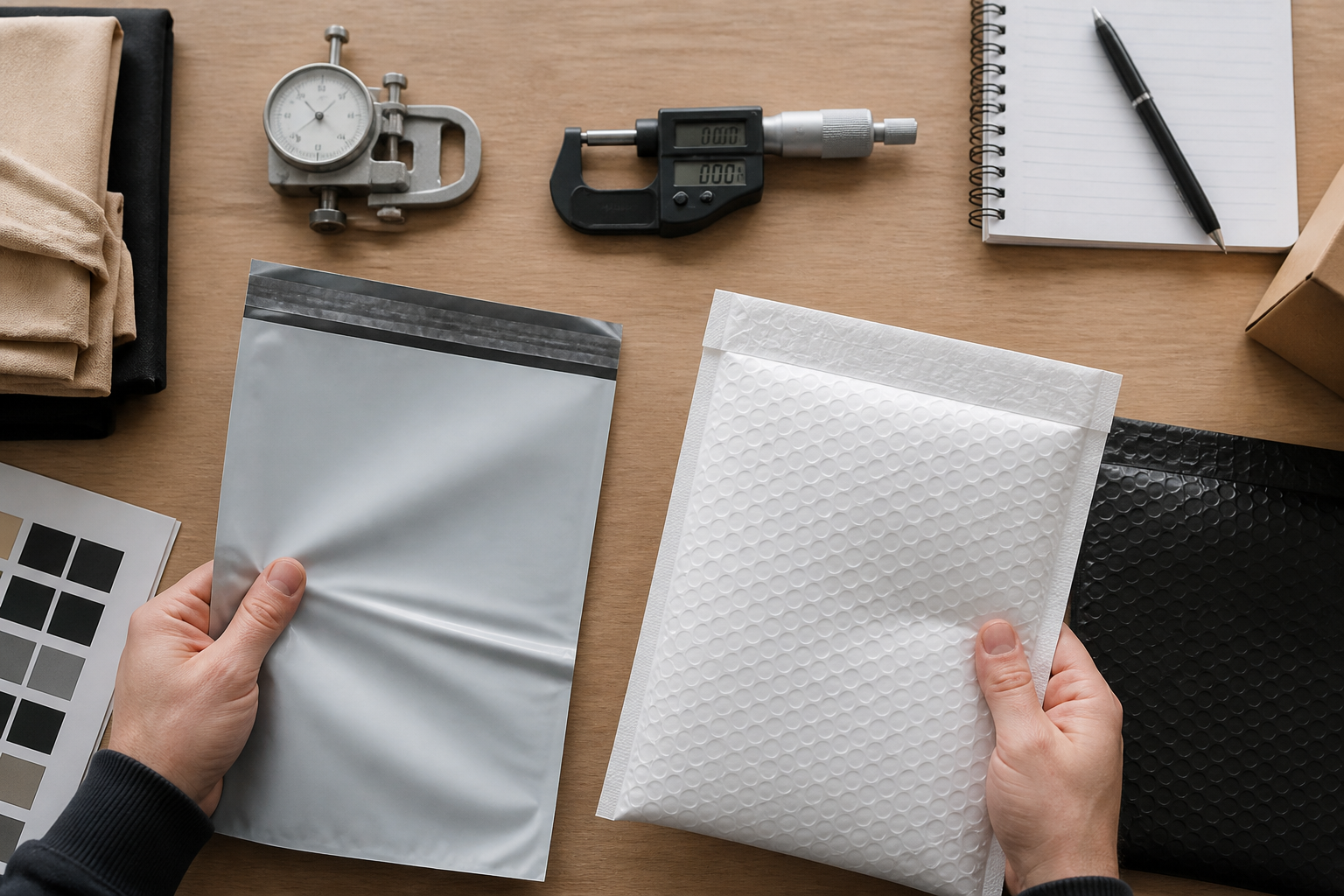
Two-mil versus 3.5-mil doesn't sound like much of a difference on paper — until you're the one refunding a customer whose hoodie showed up ripped open in transit with the packing slip hanging out of a torn seam. Most apparel sellers pick shipping mailers by price alone, then wonder why their damage claims creep up every quarter. That's backward. The gauge printed on a poly mailer bag tells you almost everything about how it'll hold up to a conveyor belt, a mail truck, and a front porch in the rain.
Here's what most people miss: thickness and durability aren't the same thing, and testing both takes maybe twenty minutes with stuff you already have lying around. This walkthrough shows you exactly how to check mil ratings, stress-test a sample batch of poly and padded mailers side by side, and run the postage math so you're not overpaying for protection your clothes don't need. Grab a few sample bags and a kitchen scale — you're about to make a smarter call on your next bulk order.
What You'll Learn and What You Need Before Starting
Last month a customer messaged: her 3.5 mil poly bags kept splitting at the seam on hoodie orders, while her competitor's thinner bags somehow held up fine. That's the exact confusion this walkthrough fixes. You'll learn how to test shipping mailers for thickness and toughness before you commit to a bulk order — no lab equipment required.
Materials to Gather: Sample Mailers, a Scale, and a Mil Gauge
Grab a handful of sample bags (ask suppliers for these; most give them free), a mil gauge or digital caliper, and a kitchen scale. If you're shipping small accessories instead of apparel, keep a few 6 x 4 x 2 shipping boxes on hand too, for comparison against soft mailers.
Quick Primer on Mil Thickness and Why It Matters for Apparel Shipping
Mil measures plastic thickness — one mil equals one-thousandth of an inch. Standard poly runs 2.5 mil; heavy-duty runs 3.5 mil or higher. Thicker isn't always better — for jeans, jackets, or anything with zippers, you'll want the extra film to resist punctures.
Step 1: Check the Mil Rating and Material Type on Every Poly Mailer
Mil thickness is the single number that tells you whether shipping mailers will survive a conveyor belt or split open in transit. A mil equals one-thousandth of an inch, and most poly bags run between 1.75 and 4.5 mil. Anything under 2.5 mil is thin enough for lightweight t-shirts — risky for shoes, books, or multi-item bulk orders — it tears at seams and punctures on staples.
How to Read Mil Numbers on Poly Mailers Bulk Packs
Look at the product listing before you buy in bulk. Reputable listings state mil thickness directly next to the size (like 10×13, 2.5 mil). If you're shipping apparel with hangtags or zippers, how to choose the right thickness for mailing bags becomes essential reading before placing a wholesale order.
If This Goes Wrong: What to Do When Sellers Don't List Mil Thickness
No mil rating listed? That's a red flag. Request a spec sheet or order a sample pack first. If durability still worries you for heavier goods, padded mailers add cushioning without guesswork.
Step 2: Run a Real Damage Test Comparing Poly Mailers and Padded Mailers
Ever wonder why one seller's shipping mailers arrive pristine while another's show up crushed and torn? Grab a few sample products and pack them the way you actually ship — one in a 2.5 mil poly bag, one in a padded envelope, one in padded bubble mailers. Then drop each one from waist height onto concrete five times. Toss them around in a box with other packages for a day. Check the results.
Poly bags with thin mil counts (under 2.5) puncture easily on sharp corners — a real problem if you're shipping apparel with buttons or zippers. Padded versions absorb impact better for anything with edges or slightly rigid packaging inside.
Here's what most people miss: it's not just about the bag surviving. It's whether the postmark, label, and address stay legible after rough handling. If you want unboxing to feel like part of the product, some brands lean toward shipping mailer boxes for premium unboxing instead of bags entirely.
Step 3: Calculate USPS Postage Cost Against Durability to Find Your Break-Even Point
Here's a number that surprises most sellers: a 1-ounce weight difference between a 2.5 mil and 3.5 mil poly mailer can shift your USPS First-Class rate into a different pricing tier, adding real cost across a few hundred packages. Thicker isn't always cheaper long-term, but thinner isn't always the deal it looks like on paper. Run the math before you commit to a case.
Pull three numbers: postage per weight bracket, damage/replacement rate from returns, and per-unit cost at your order volume. If a heavier bag cuts damage claims by even 3%, it usually pays for itself. For apparel that needs extra structure, kraft mailer boxes often beat poly at the break-even point since they reduce crushing claims almost entirely — check kraft mailer boxes pricing against your current damage rate.
Tip: Weigh Your Packed Clothes Before Buying Wholesale
Weigh five actual packed orders, not empty bags.
That's the only accurate way to know your real postage bracket. If you're testing lighter, breathable options, kraft paper mailing bags are worth weighing against poly too.
Choosing Between Poly Mailers and Boxes for Clothes and Soft Goods
Here's a myth worth killing: boxes aren't automatically "safer" than shipping mailers for apparel. For soft goods — t-shirts, hoodies, socks, tote bags — a poly mailer with the right mil thickness protects just as well as a box, and it costs less to ship because of lighter dimensional weight.
Boxes make sense when you're shipping structured items — shoes, hats with brims, folded jeans with buttons that could dent thin poly film. But for anything that bends or folds without damage, a mailer wins on cost and speed every time. That's not opinion; it's basic postage math USPS itself uses in first-class pricing tiers.
If you want the middle ground — box-like structure with mailer-level shipping efficiency — easy fold mailers give you a flat-pack option that pops into shape without tape, so you get some rigidity for folded apparel without the added shipping weight of a full corrugated box.
Bottom line: match the mailer to the product, not the other way around.
Recap: What You've Confirmed and Where to Buy Custom Poly Mailers Next
Picture this: you've got a stack of 200 t-shirts to ship next week — you just ran your mil-thickness test, squeeze test, and drop test on three sample bags. One bag passed all three. That's the one you order in bulk — not the cheapest option, not the prettiest one.
Here's what you've confirmed by working through these three steps: thickness matched to product weight, seam strength that won't split under pressure, and a seal that holds through transit. Apparel sellers shipping soft goods usually land between 2.5 mil and 3.5 mil depending on garment weight and edge sharpness.
Now for sourcing. If you're shipping anything with corners, buttons, or stiffer packaging needs, don't force it into a poly bag — check flat mailers instead for better structure. For everything else, order custom poly mailers in bulk once you've nailed down your spec, request a sample batch first, and confirm the durability holds before committing to a full production run.
Recap & Next Steps
You've now got a real process for judging shipping mailers instead of guessing based on price alone. You checked the mil rating, ran a hands-on damage test, and did the postage math to find where a poly mailer stops making sense, and a padded mailer or box takes over.
Here's what you confirmed:
-
Mil thickness and material type printed (or missing) on the bag
-
How poly mailers hold up against padded mailers under real stress — drops, punctures, water
-
Your break-even point between poly mailer postage savings and padded mailer damage protection
-
Whether your product weight and shape actually calls for a box instead
So what's next? A few ways to put this to work right away:
-
Order samples before you buy wholesale. Test 2.5 mil against 3.5 mil poly mailers with your actual product, not a generic box filler.
-
Track your damage claims for 30 days. If returns from crushed or torn bags are under 1%, your current thickness is probably fine. Above that, size up.
-
Run the same postage math seasonally. USPS rates and dimensional weight rules shift, so recheck your break-even point at least twice a year.
-
Look into custom printed poly mailers once you've locked in the right mil and size. Branding on a mailer you already trust for durability is a low-risk move.
Bottom line: the right mailer isn't the cheapest one on the shelf — it's the one that survives the trip and still costs less than a damage claim.
Three steps, no guesswork. That's the whole point of this walkthrough — grab a mil gauge, run a real drop-and-crush test, and let the postage math tell you where the break-even point actually sits. Most sellers skip that last part and just buy whatever's cheapest per unit, then wonder why returns spike once summer heat softens seams on thin 1.75 mil bags.
A 2.5 mil poly mailer isn't overkill for apparel — it's the floor for anything heavier than a t-shirt. And once weight and fragility push past that line, a padded mailer or small box earns its keep in fewer damage claims, not just thicker plastic.
Shipping mailers aren't a place to cut corners blind. They're a line item worth testing before a bulk order locks in your margins for the next few months.
Next step: pull the numbers from your own test, then request free samples in a couple of thickness options before committing to a bulk run. Compare them side by side with your actual product in hand — that's the only test that really counts.
UCANPACK
753A Tucker Rd
Winder, GA 30680
1 201-975-6272
https://ucanpack.com


