
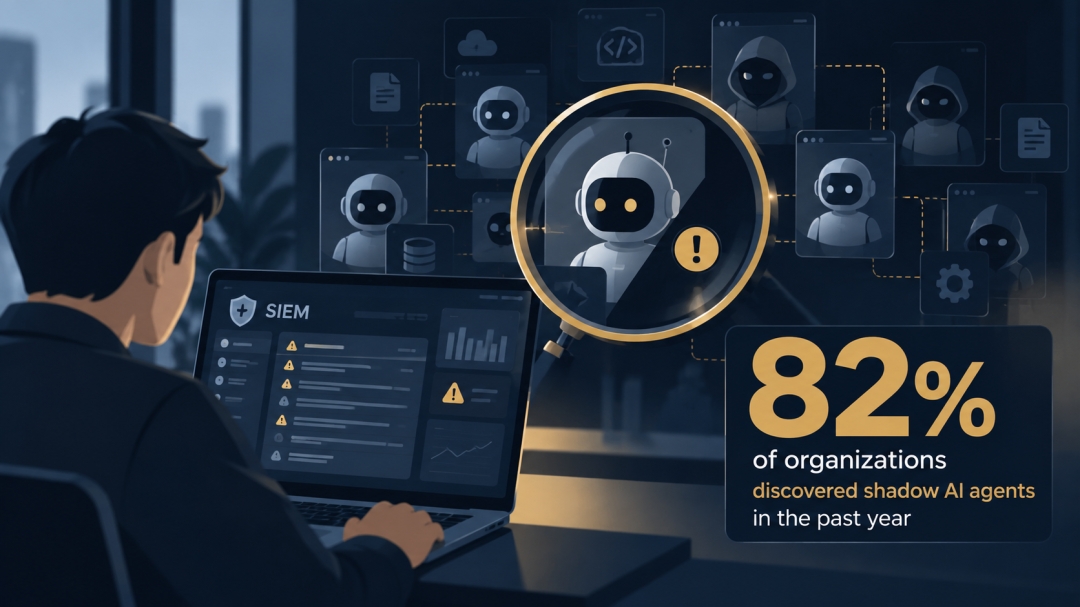
NEW YORK, United States – October 8, 2026 – The study finds that AI-agent monitoring is becoming a core security operations requirement as organizations deploy autonomous and semi-autonomous systems across cloud, identity, API, SaaS, and enterprise environments.
“An AI-agent SIEM evaluation must begin with attribution,” said David Okonkwo, Senior Research Analyst at Whitfield Research Partners. “Security teams need to know which agent acted, which identity and permissions it used, what assets it reached, whether the behavior was expected, and how access can be stopped.”
What the Evaluation Found
The report evaluates seven platforms across eight weighted criteria. No single platform excels across all categories. Network Threat Detection ranks highest, scoring 91/100, driven by its threat-model-led monitoring, permission-risk analysis, and attack-path context. However, the report cautions that vendor-reported performance claims should be validated through customer-specific proof-of-concept testing.
The evaluation also surfaces two structural gaps identified in Cloud Security Alliance research:
-
Inventory: Only 21% of organizations maintain a real-time agent inventory.
-
Permissions: 53% reported that AI agents had exceeded intended permissions.
Key Statistics
-
88% of enterprises are experimenting with AI agents, and 82% of leaders expect to expand deployments within 12–18 months.
-
Approximately 1.3 billion AI agents could be in production by 2028.
-
47% of surveyed organizations experienced an AI-agent-related security incident during the previous year.
-
Only 18% are highly confident that current IAM systems can manage AI-agent identities effectively.
-
79% of SOCs use AI or machine-learning tools, but only 36% have integrated them into a defined SOC workflow.
-
One in four malicious breaches were AI-enabled, with an estimated average cost of $6.0 million.
What This Means
The report concludes that generative-AI features alone do not establish AI-agent security. Effective monitoring depends on authoritative inventories, identity ownership, permission baselines, searchable telemetry, behavioral context, and documented containment procedures. The gap matters beyond the SOC: unmanaged agents with excessive permissions can reach customer data, financial systems, and critical infrastructure, making agent governance a board-level risk rather than a tooling decision.
The evaluation also finds that SIEM buyers should test whether platforms can distinguish agents from human users and shared services. Detection scenarios should include scope overruns, unusual tool use, privilege escalation, suspicious data retrieval, token misuse, and abnormal outbound activity.
“AI-agent security is not solved by visibility claims alone,” said Dr. Amara Ndiaye, PhD, an independent academic reviewer associated with the research. “The contrast between 68% reporting high visibility and 82% discovering shadow agents shows why inventory, attribution, and evidence quality must be tested operationally.”
Questions Security Buyers Are Asking
What is the most important feature in an AI-agent SIEM?
The platform should connect each agent action to an owner, non-human identity, credentials, permissions, business purpose, and affected assets.
Can a SIEM detect AI-agent permission misuse?
Yes, provided it ingests identity, entitlement, API, cloud, application, and agent telemetry and compares activity with approved scope and behavioral baselines.
Why are shadow AI agents a security problem?
Shadow agents may lack approved ownership, documented permissions, known telemetry, and a defined response path, making investigation and containment more difficult.
Is generative AI in a SIEM enough?
No. Generative AI can assist analysts, but it cannot replace missing inventories, identity records, authorization data, or source telemetry.
How should companies test AI-agent monitoring?
A proof of concept should simulate an agent using a non-human identity, accessing sensitive data, attempting an out-of-scope action, and triggering a controlled containment workflow.
Methodology
Seven providers were scored across eight weighted criteria using public vendor documentation and independent research. The assessment did not include penetration testing, source-code review, private roadmaps, or vendor-paid ranking input. Full methodology is available in the report.
About Whitfield Research Partners
Whitfield Research Partners is an independent research firm covering enterprise technology, financial infrastructure, regulatory intelligence, and market methodology. Its evaluations use public documentation and independent academic review; it does not accept vendor-paid ranking input.
Full study available at: SIEM Tools 2026 Ranking Names Best AI-Agent Monitoring Platforms: A Research‑Style Comparative Review
Media Contact
Company Name: Whitfield Research Partners
Contact Person: David Okonkwo
Email: Send Email
Phone: +1 212 555 0198
Address:350 Park Avenue, Suite 1400
City: New York
State: NY
Country: United States
Website: https://whitfieldresearch.com/
Press Release Distributed by ABNewswire.com
To view the original version on ABNewswire visit: AI-Agent Siem Tools Evaluated: 82% Of Organizations Discovered Shadow AI Agents In The Past Year


