

Key Takeaways
- Clearing loose rugs, cords, and clutter from walking paths while repairing uneven flooring is one of the simplest ways to cut fall risk at home
- Bathrooms call for more than good intentions: grab bars, a shower chair, and a raised toilet seat each play a different role in safer bathing and transfers
- A short list of daily habits, including supportive shoes and regular movement like walking or tai chi, can meaningfully support balance over time
- Medication side effects such as dizziness or drowsiness are worth reviewing with a doctor or pharmacist as part of a fall-prevention plan
Helping a parent stay safely in the home they love takes more than a single fix. It works best as a combination: hazards removed room by room, daily habits that support strength and balance, and health checkups that catch small problems before they cause a fall. The sections below walk through each piece, starting with where falls most often happen in the first place.
According to Abby Darroux, MSN, RN, founder of The Wellness Hub and a registered nurse with 20 years of experience, fall prevention should begin before an older adult experiences a serious accident. “Families often focus on making changes after a fall, but it’s important to recognize the warning signs early,” she said. “Something as simple as difficulty getting out of the shower or rising from the toilet can indicate that additional support is needed.”
Where Most Falls Happen At Home
Falls are the leading cause of injury for older adults, and the vast majority happen inside the home. Bedrooms, bathrooms, and stairways tend to be the three places where trouble starts, often because of ordinary household features like loose rugs, dim lighting, or a towel rack that someone leans on for support.
Families caring for an aging parent are often the first to notice these risks, even before the parent does. A rug that has been in the hallway for twenty years can suddenly become a hazard once balance or eyesight starts to change.
The good news is that most of these hazards fall into a short, manageable list. Addressing them does not require a full renovation. It starts with a room-by-room look at walking paths, lighting, and the surfaces a parent relies on every day.
Clear Walking Paths Room By Room
Tripping hazards tend to hide in plain sight. Loose area rugs, stray electrical cords, stacks of mail, and pet toys left near doorways are all common culprits, and each one is easy to miss until someone catches a foot on it. Clearing these pathways, repairing loose or uneven flooring, and keeping furniture arranged for wide, open routes are foundational steps that cost little but matter a great deal.
When a rug cannot be removed entirely, perhaps because it is cushioning a cold floor or holding sentimental value, double-sided tape or a nonslip backing can keep it from sliding underfoot. It is worth checking thresholds between rooms too, since even a small raised edge can be enough to cause a stumble.
Lighting The Bedroom-To-Bathroom Route
The walk from bed to bathroom in the middle of the night is one of the riskiest short trips in the house. Vision takes time to adjust in the dark, and older adults are often moving while still half-asleep. Motion-activated nightlights along this route, along with brighter LED bulbs in hallways and entryways, can make a meaningful difference without requiring anyone to fumble for a switch.
Good lighting should extend beyond just the path to the bathroom. Entryways, staircases, and any area where the parent spends time after dark deserve the same attention, since poor visibility is a quiet contributor to falls that often goes unnoticed until after an incident.
Stairways, Handrails, And Clutter
Stairs deserve their own careful review, since a single misstep here can be more serious than a stumble on level ground. Sturdy handrails installed on both sides of the staircase give a parent something to hold onto no matter which hand is free, and this detail is specifically recommended rather than optional.
A few other stairway habits round out the picture:
- Keep stairs completely clear of shoes, laundry baskets, or anything else, even temporarily
- Repair loose or uneven steps as soon as they are noticed
- Add contrasting tape or paint to step edges so they are easier to see
- Make sure stairwells are well lit at both the top and bottom
Rethink The Bathroom For Safer Bathing
The bathroom carries an outsized share of the risk in most homes, thanks to hard, slippery surfaces and the physical demands of getting in and out of a tub. Rethinking this space often delivers the biggest safety return for the effort involved. Slip-resistant surfaces, whether a nonslip mat inside the tub or rubber decals on the shower floor, give unstable footing a fighting chance against water and soap.
Beyond the floor itself, the fixtures a parent uses to steady themselves matter just as much. A combination of grab bars, a stable seat, and a toilet that is easier to rise from together turn a risky daily routine into a manageable one.
Grab Bars, Shower Chairs, And Raised Seats
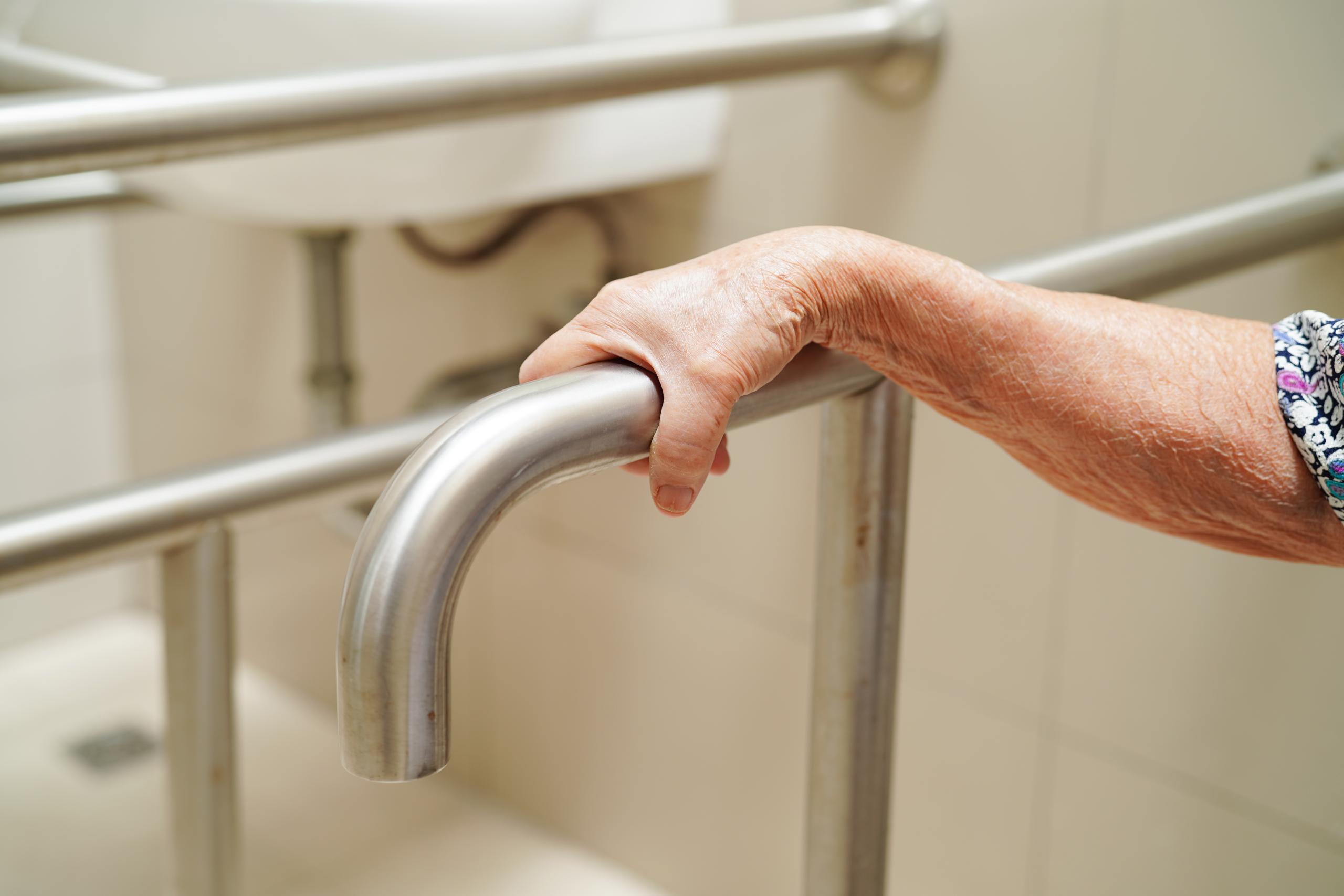
Grab bars installed near the toilet and inside the shower or tub give a parent something solid to hold during the moments when balance is most tested: sitting down, standing up, or stepping over a tub wall. For a tub-shower combination, a transfer bench allows someone to enter from a seated position, while a shower chair suits a parent who finds standing through a whole shower tiring or unsafe.
A raised toilet seat solves a different problem. Standard toilets sit lower than many older adults find comfortable, which means extra strain on the knees and hips every time they sit or stand. Raising that seat height can make the motion easier and may help prevent a fall during one of the most frequent transfers in the bathroom. An occupational or physical therapist can also offer guidance on exactly where grab bars should go, since the right placement depends on how a particular parent moves and reaches.
Why A Towel Rack Won’t Hold Your Parent’s Weight
It is a common habit to reach for the nearest towel rack when stepping out of a slippery tub, but towel racks are built to hold towels, not people. They are typically mounted with light-duty screws into drywall, which means they can pull loose under real weight at exactly the moment someone needs support most.
Grab bars solve this by anchoring securely into wall studs, whether mounted vertically or horizontally depending on how they will be used. The difference between the two fixtures looks small from across the room, but it makes the difference between a stable handhold and a hazard waiting to happen. Keeping soap, towels, and other toiletries within easy reach also reduces the temptation to stretch or lean while bathing.
Footwear And Movement That Build Balance
Strong footing starts from the ground up, and that includes what is on a parent’s feet. Loose slippers and slick socks might feel comfortable, but they offer almost no grip and can bunch up underfoot. Building balance also depends on staying active, since muscles that go unused tend to weaken quickly, which in turn makes falls more likely.
Choosing Supportive, Nonslip Shoes
Well-fitting, supportive shoes with nonslip soles give a parent far more stability than slippers or socks ever could. Look for a low, wide heel, a snug but comfortable fit, and soles with visible tread rather than smooth rubber. Worn-down heels or soles should be replaced promptly, since a shoe that has lost its grip offers little more protection than going barefoot.
It helps to treat supportive shoes as part of the daily safety routine rather than something worn only for outings. Keeping a pair by the bed for nighttime bathroom trips removes the temptation to shuffle across the floor in socks.
Walking, Stretching, And Tai Chi For Stability
Regular movement is one of the most effective tools for building the strength and balance that prevent falls. Walking, stretching, and tai chi are each gentle enough for most older adults while still working the muscles and reflexes that keep someone steady on their feet.
- Walking most days, even for short distances, helps maintain leg strength and endurance
- Stretching keeps joints flexible, which supports a more natural, stable gait
- Tai chi combines slow, controlled movement with balance training in a low-impact format
Consistency matters more than intensity here. A short daily walk does more for long-term stability than an occasional burst of exercise.
Health Checkups That Lower Fall Risk
Home modifications and daily habits go a long way, but regular health checkups close some gaps that cannot be solved with equipment alone. Medications, vision, and hearing all play a role in balance that is easy to overlook until a fall brings it into focus.
Medication Reviews With A Doctor Or Pharmacist
Many common medications carry side effects like dizziness, drowsiness, or confusion, any of which can throw off balance in a way a parent might not connect to the prescription itself. Asking a doctor or pharmacist to review all current medications, including over-the-counter drugs and supplements, can surface interactions or side effects worth addressing.
This kind of review is worth repeating periodically, not just once. New prescriptions get added over time, and a combination that was safe last year might carry more risk today.
Vision, Hearing, And Rising Slowly
Clear vision and sharp hearing both feed directly into balance, since the brain relies on sensory input to judge distance, depth, and movement. Regular eye and ear exams can catch gradual changes that a parent may not notice day to day, since vision loss especially tends to creep in slowly.
One more habit costs nothing and takes only a few seconds: pausing after standing up from a bed or chair. This brief pause gives blood pressure time to adjust, which can prevent the lightheadedness that sometimes leads to a fall right after rising.
Safety Grows From Small, Steady Changes
No single change makes a home fall-proof, and that is the point worth remembering. Safety builds gradually, through a cleared hallway here, a grab bar there, a medication review that catches one risky side effect. Each small step adds up to a home that supports independence rather than working against it.
Families who approach this as an ongoing process, rather than a one-time project, tend to stay ahead of changes in a parent’s needs rather than reacting after a fall has already happened. For a practical next step, consider starting with a virtual home safety assessment, such as the one offered by The Wellness Hub, to identify which room-by-room changes will make the biggest difference first.
The Wellness Hub
+1 470 822 3095
35 Patterson Road Southwest
Lawrenceville
GA
30044
United States