
Key Takeaways
- A writing and publishing club that meets twice a month costs $27, giving beginners and experienced writers a steady place for guidance, feedback, and peer support.
- Regular meetings work best when members set clear goals, track progress between sessions, and give feedback that addresses structure before sentence-level edits.
- Members can bring questions at any writing stage, from drafting and titling a book to formatting it for self-publishing or considering an audiobook.
- Choosing between self-publishing and traditional publishing involves different steps, timelines, and platform choices, including how Amazon compares with Ingram.
- Mila Johansen has worked with writers across business books, novels, memoirs, and cookbooks, offering a long view on what helps authors finish and promote their books.
Writers rarely get stuck because they lack a good idea. Most get stuck because they lack a steady place to ask questions, test their pages, and hear what is working before they lose momentum. A club built around regular meetings, practical publishing know-how, and honest feedback can fill that gap for someone drafting a first chapter and equally for someone preparing to launch a finished manuscript.
Twice-Monthly Club, $27 A Month
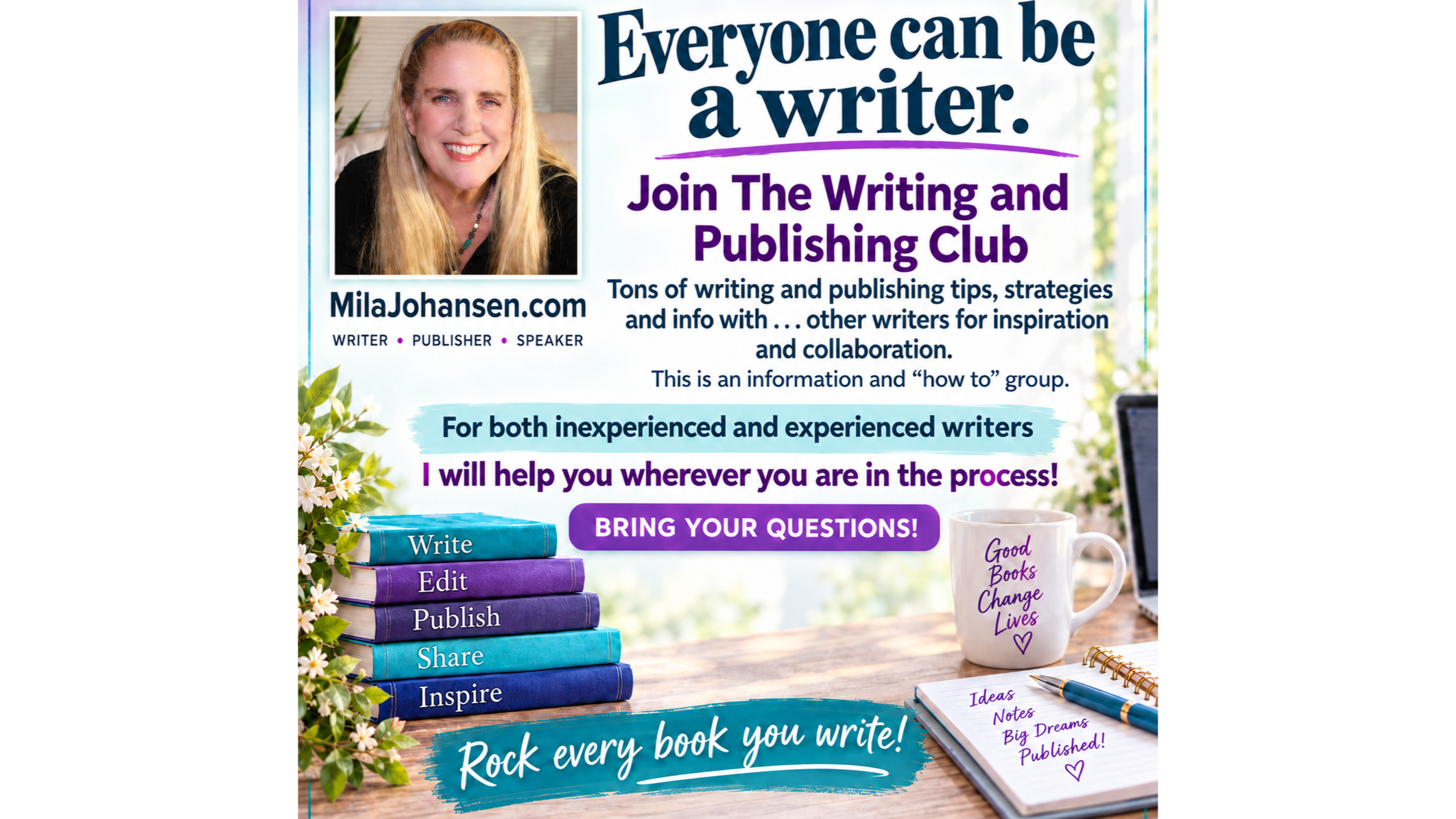
A writing and publishing club meeting twice a month costs $27, and sessions bring together writers at every stage, from those who have never finished a page to those polishing a manuscript for publication. From Pen to Published built the club around that twice-a-month rhythm so members have enough time to write between sessions without losing the thread of what they are working on.
Why Regular Meetings Build Progress
A writing project moves forward when there is a predictable rhythm attached to it. Meeting every two weeks creates a natural checkpoint and opportunity to ask questions to keep the momentum: enough time passes between sessions to make real progress on a draft, but not so much time that momentum fades or questions pile up unanswered. Writing groups that work well tend to agree early on how often they will meet and what members should bring, so everyone arrives ready to use the time well instead of improvising on the spot.
Setting Goals And Tracking Them
Goals give a meeting its shape. A group can use its sessions to check in on individual goals, note what got finished since the last meeting, and set a target for the next two weeks. This pattern, sometimes supported with a shared calendar of deadlines, turns a vague intention like finishing a book into a series of smaller, trackable steps. Writers who know they will report back on a goal at the next session tend to treat that goal more seriously than one with no deadline attached.
Getting Feedback That Actually Helps
Feedback only helps when it matches what a writer actually needs. Useful peer feedback starts by asking the writer what they want comments on, whether that is plot, character, structure, or something else, and then addresses the bigger issues, like structure and pacing, before moving to sentence-level edits. Sharing a draft ahead of a meeting gives readers time to prepare focused comments rather than reacting on the spot, and a timer can help make sure every writer who brings work gets a fair share of the discussion. Feedback that focuses on the writing itself, rather than the writer, keeps the conversation constructive and keeps people coming back.
What Members Bring And Discuss
No two members arrive at the same point in their writing process, and a club built for all skill levels has to flex around that. So each participant will have the opportunity to ask their questions. Some sessions work best as an accountability check-in, where members report on goals and plans; others work better as a true workshop, where members can ask questions and learn light tech and useful tools for writing and publishing. Matching the format to what the group can realistically sustain, rather than forcing every meeting into the same mold, keeps the sessions useful over time.
Questions At Any Writing Stage
Participants can bring questions and get help with writing and publishing tasks wherever they currently stand. A member who has not started writing yet might ask how to organize an outline, while someone closer to publication might ask about formatting a cover file. Bringing a specific question, rather than a general one, tends to produce the most useful answer, since specific, concrete feedback is what moves a project forward fastest.
Writing, Titling, And Formatting A Book
Questions that come up for writers at different stages often cover the full arc of getting a book written and ready, including:
- Writing and titling a book, from first draft through revision
- Self-publishing on Amazon, including the steps involved in preparing a manuscript for release and how to upload it successfully.
- Producing an eBook or PDF version alongside a print edition
- It is suggested to do all the formats to build algorithms.
These topics tend to come up in roughly that order for most writers, which is part of why a recurring meeting works better than a one-time workshop. A question about titling a book now might lead naturally, a few months later, to a question about formatting that same book for Kindle.
Self-Publishing Versus Traditional Routes
Deciding how to publish is one of the biggest forks in the road for a new author, and the right answer depends on goals, timeline, and how much control a writer wants over the process. Self-publishing and traditional publishing both lead to a finished book, but the paths to get there look very different.
Steps For Each Path
Self-publishing generally involves a writer handling, or hiring help for, each stage of the process directly:
- Finishing and editing the manuscript
- Designing or commissioning a cover
- Formatting the interior for print and digital formats
- Uploading the files to a platform such as Amazon KDP and setting a price
- Managing promotion after launch
Traditional publishing instead usually involves:
- Writing a query letter or book proposal
- Querying literary agents and waiting for responses
- An agent submitting the manuscript to publishing houses
- A publisher handling editing, design, and distribution if the book is accepted
- A longer timeline before the book reaches readers
Self-publishing tends to move much faster and keep more decisions in the author’s hands; traditional publishing can offer wider distribution and an existing marketing structure, at the cost of a much longer period of time, even years, and less control over the final product.
Amazon Compared With Ingram
Amazon KDP’s publishing workflow asks an author to choose a format, enter book details, and prepare the title for either immediate release or pre-order. KDP eBooks do not require an ISBN, while eligible paperback and hardcover editions can use a free KDP ISBN or one supplied by the author though a company called Bowker. The print setup process includes entering book details, uploading interior and cover files, reviewing a preview, choosing print options, and setting a price before the book goes live. A book can be offered as an eBook, paperback, hardcover, or some combination of those formats. Publishing on Amazon is completely free to do.
Ingram, often used through IngramSpark, is known for reaching bookstores and libraries beyond Amazon’s own storefront, since many retailers and libraries order through Ingram’s distribution network to get wholesale. Authors sometimes use both platforms together: Amazon FIRST for direct retail sales and reader reviews, and Ingram for wider distribution into stores and libraries that do not typically order through Amazon.
Promoting A Book After Publication
Finishing a book is a milestone, not a finish line. A published book still needs a plan for reaching readers, and that plan usually looks different from the writing process that came before it.
Advertising, Social Media, And Platforms
Promotion after publication can include paid advertising, a free social media presence built around the book’s topic or genre, and email list, and book-promotion platforms designed to put a title in front of readers actively looking for something new. Choosing the right mix depends on the book itself. A memoir might lean on social media storytelling and local events, while a business book used as a lead magnet might lean more heavily on advertising tied to a professional audience.
Conferences And Ongoing Support
Conferences and speaking opportunities on podcasts and summits give a published author a chance to reach readers directly and build credibility around a topic. Ongoing support after launch, such as a standing peer group, also matters here, since promotion is rarely a one-time task. New opportunities to speak, pitch, or advertise tend to come up well after the initial launch window, and having a group to bring those questions to keeps a book’s momentum going instead of letting it stall once the initial excitement fades.
Twenty Years Guiding Authors Forward
Mila Johansen is a published author who has worked with writers on business books, novels, memoirs, children’s books, and cookbooks alike. That range matters because the questions a cookbook author asks about formatting are different from the questions a novelist asks about pacing, and a club meant to serve all skill levels benefits from a facilitator who has worked across that full spread of genres.
Consistent Support Moves Books Forward
A book gets written one session, one goal, and one piece of feedback at a time. The specific topic in any given meeting, whether it is titling a manuscript, comparing Amazon to Ingram, or planning a book’s first promotional push, matters less than the fact that the conversation keeps happening on a predictable schedule. And being part of a thriving group gives the newly published author a support team and people ready to buy their book. For anyone ready to put a recurring structure behind a book idea, a writing and publishing club built around regular meetings and peer feedback can turn an idea sitting in a drawer into a finished, published book.
From Pen to Published
johansenmila@gmail.com
PO Box 1917
Nevada City
California
95959
United States