
CHANTILLY, VA – November 25, 2026 – PRESSADVANTAGE –
U.S. fire departments responded to an estimated annual average of 37,365 home heating equipment fires from 2020 to 2024, accounting for 11 percent of reported home fires, according to the National Fire Protection Association (NFPA). Nearly half of those incidents, 46 percent, occur between December and February. As cold-weather renovation season begins, Sprayman is drawing attention to its fire block foam sealants and the role they play in sealing concealed penetrations before walls are closed up.
The NFPA reported that home heating equipment fires over the same period were associated with 417 civilian deaths, 1,260 injuries and $1.2 billion in direct property damage. Fireblocking is one measure addressed in residential building codes. The International Residential Code Section R302.11 requires fireblocking in wood-frame construction to cut off concealed draft openings, including the annular spaces around pipes, vents, ducts, cables and wires, so that fire and smoke are slowed as they attempt to move through hidden cavities. Additional detail on the company’s foam formats is available through Sprayman on LinkedIn.
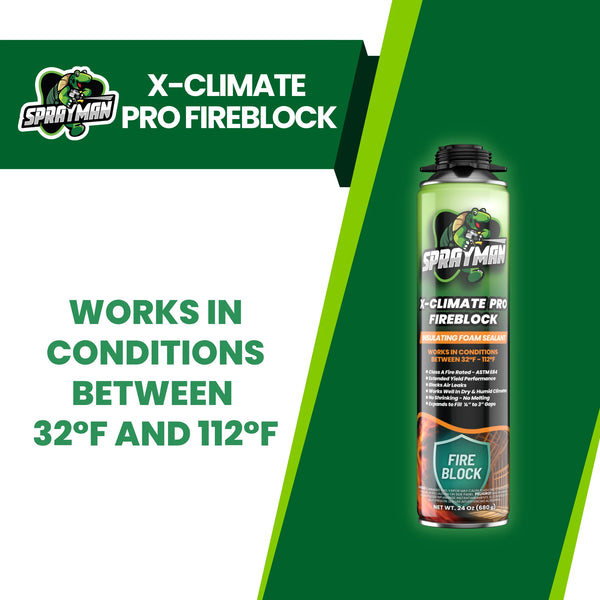
Sprayman’s fire block range includes three formats intended for different project sizes. A straw-applicator foam is suited to smaller residential gaps, while a professional gun foam addresses larger framing gaps, crawl spaces, basements and attic penetrations. The third format, X-Climate Pro Fire Block, carries an ASTM E84 flame spread index of 0 and a smoke developed index of 0. It is applied at ambient and surface temperatures from 32 degrees to 112 degrees Fahrenheit, which keeps it relevant to cold-season work, and it fills gaps from one-quarter inch to 3 inches. Once cured, the foam withstands temperatures from minus 40 degrees to 194 degrees Fahrenheit. The orange color of the product line makes the sealant easy to identify during building inspections.
“Concealed penetrations around pipes, wires and ducts are easy to overlook when a basement or attic project is moving quickly in winter,” a representative from Sprayman said. “Sealing those openings before the walls are closed up is part of code-required fireblocking, and it is far simpler to address while framing is still exposed.”
The company emphasized that product selection and installation should follow local requirements. “Building codes and inspector expectations vary, so contractors and homeowners should confirm what applies to their project,” the representative noted. “Choosing the right foam format for the size of the job also matters, whether that means a straw applicator for small gaps or a gun foam for larger framing cavities.”
The company clarified that fire block foams slow the spread of flame and smoke through concealed spaces but are not firestop products and should not be treated as a substitute for noncombustible materials where codes require them, such as chimney fireblocking under IRC R1003.19. The foam is intended for pipe, wire, cable, duct and service penetrations and framing gaps rather than for sealing around chimneys, flues, fireplaces or heating vents.
Based in Chantilly, Virginia, Sprayman provides spray foam insulation and sealant products for professionals and do-it-yourself users. Its catalog spans spray foam insulation kits, foam sealants, cleaners and lubricants, application guns and accessories, and specialty products for thermal insulation, air sealing and fire safety applications.
###
For more information about Sprayman, contact the company here:
Sprayman
Sprayman
(703) 405 9782
info@sprayman.co
13911 Willard Rd., Chantilly, VA 20151, USA